• About

SOCIAL PERSPECTIVES
  • Too Big to Fail, Too Bound to Fly: Air India Reveals the Quiet Collapse of Scale in Modern Capitalism

    January 27th, 2026

    If one wishes to understand the fragility of modern capitalism, it is no longer sufficient to study obscure start-ups quietly incinerating venture capital. The real diagnostics lie in the distress of icons—institutions presumed immune because they possess pedigree, patience, and prodigious balance sheets. When a national airline bleeds over a billion dollars, when private equity stalks sports franchises like distressed steel plants, and when even the world’s most valuable corporations require tens of billions merely to stay solvent, one truth becomes unavoidable: scale no longer guarantees stability. Air India, resurrected under the Tata Group amid national emotion and international applause, is rapidly emerging as a textbook example of how privatization can inherit ownership without inheriting freedom.

    India’s flag carrier is expected to post net losses of at least $1.6 billion in FY2026—roughly ₹15,000 crore. This is not a routine cyclical setback in an industry accustomed to turbulence; it is a strategic rupture from expectation. When Tata Sons reacquired Air India in 2022, the promise was intoxicating. Bureaucratic drift would give way to professional management, political improvisation would be replaced by patient capital, and global partnerships would finally liberate the airline from decades of state-induced inertia. A rebranded identity, record-breaking aircraft orders, the Vistara integration, and confident projections of breakeven by March 2026 suggested a decisive break from the past. Today, that narrative is wobbling uncomfortably at cruising altitude.

    The June 2025 Boeing 787 Dreamliner crash near Ahmedabad was, first and foremost, a human tragedy of devastating proportions—one of the worst aviation disasters India has witnessed in decades. But it also triggered a financial and reputational shock that no balance sheet could absorb without lasting damage. More than 240 lives lost, insurance premiums expected to double, lawsuits filed in London with potential liabilities running into hundreds of millions of dollars, and a profound operational disruption erased years of fragile progress in a matter of weeks. What was meant to be a turnaround year became a reset year—if not an institutional reckoning. A revised five-year plan projecting profitability only by the third year reportedly failed to reassure the board, while Tata and Singapore Airlines were asked to inject at least another ₹10,000 crore simply to keep the airline airborne.

    Yet attributing Air India’s predicament solely to tragedy would be intellectually evasive. The deeper discomfort lies elsewhere. The airline’s struggles expose a structural truth that polite boardroom conversations often avoid: Air India may be privately owned, but it still operates inside a government-designed aviation cage. Pakistan’s prolonged closure of airspace to Indian carriers forces longer westbound routes to Europe and North America, adding hours to flight times and sharply inflating fuel costs—an unhedgeable geopolitical tax imposed on Indian airlines. Aviation turbine fuel remains among the most heavily taxed in the world. Airport charges are high, leasing norms complex, dispute resolution painfully slow, and policy predictability episodic at best.

    These are not failures of management. They are failures of the ecosystem.

    What makes Air India’s case particularly unsettling is how privatization has failed to insulate the airline from its own institutional memory. Internal surveys reportedly suggest that nearly two-thirds of employees believe “nothing meaningful has changed.” Legacy work practices endure, unions continue to influence productivity outcomes, and internal administration often feels like an extension of the state—new logos pasted onto familiar files. Aging widebody aircraft operate alongside brand-new A350s, producing wildly inconsistent passenger experiences. Spare-parts shortages persist, service standards oscillate, and the cultural friction between bureaucratic habits and corporate efficiency shows little sign of resolution. Leadership churn only compounds uncertainty, with reports that Tata is already scouting for a new CEO pending the crash investigation’s conclusions.

    The uncomfortable truth is this: Air India today resembles less a transformed private airline and more a public sector enterprise in a tailored suit. Ownership has changed, but the regulatory umbilical cord has not been cut. The airline is attempting one of the most complex integrations in global aviation—merging Air India, Vistara, Air India Express, and AIX Connect—while simultaneously flying full schedules, inducting hundreds of aircraft, retrofitting cabins, retraining staff, and rebuilding passenger trust. It is, quite literally, rebuilding the aircraft while it is still in the air.

    This story reflects a broader macroeconomic unease. India aspires to create global champions, yet continues to govern critical sectors through ad hoc rules, political sensitivities, and reactive policymaking. Aviation is treated less as core economic infrastructure and more as a regulatory experiment. Fuel taxes vary arbitrarily across states, airspace access remains hostage to geopolitics, and Indian airlines are expected to compete with Middle Eastern carriers that enjoy structural advantages policymakers are reluctant to acknowledge. In such an environment, management excellence becomes necessary—but fundamentally insufficient.

    The lesson from Air India is therefore uncomfortable but unavoidable. Privatization alone does not repair structurally distorted sectors. You can hand the cockpit to the best pilots in the world, but if the weather radar is unreliable and air traffic control keeps changing instructions mid-flight, turbulence is inevitable. Indian aviation needs standardized, transparent, and predictable regulation—rational fuel taxation, stable airspace policies, faster dispute resolution, competitive airport charges, and leasing norms aligned with global best practices.

    Rescuing Indian aviation is not about bailing out airlines. It is about repairing the ecosystem in which they operate. Without that correction, even the Tata Group—with its credibility, capital, and intent—will continue to battle headwinds that no amount of managerial discipline can overcome. If Air India struggles, it is not an anomaly. It is a warning. In modern India, even private icons can crash if the system itself is flying blind.

    Visit arjasrikanth.in for more insights

  • “From Rajpath to Responsibility: India’s Democratic Reckoning” 

    January 26th, 2026

    Republic Day is not a ritual of uniforms, gun salutes, or rehearsed grandeur; it is India’s annual audit of its own conscience. On 26 January 1950, a bruised yet unbroken nation made a decision rarer than freedom itself—to place law above impulse, institutions above individuals, and rights above rulers. It was an audacious wager in a world sceptical of post-colonial democracy. Every Republic Day since has been a recommitment to that gamble. In 2026, as the Republic enters its 76th year, remembrance matures into responsibility, and pride is tested against purpose.

    The Constitution transformed India from a civilisational entity into a modern republic without erasing its plural soul. Republic Day therefore celebrates unity without uniformity and diversity without dilution. It reminds us that democracy is not inherited like property; it is practiced like a discipline. Each generation must relearn it, renegotiate it, and defend it. In 2026, that practice is framed by a forward-looking national imagination—Viksit Bharat 2030—linking constitutional morality to developmental ambition and situating today’s governance within the longer arc toward a developed India by 2047.

    Kartavya Path, replacing Rajpath, is more than symbolic urban redesign; it is philosophical course correction. Duty replaces dominion, citizenship displaces colonial spectacle. The parade becomes narrative rather than noise. Digital India connects the remotest villages; women-led development redraws economic hierarchies; a Green Energy transition reshapes skylines and balance sheets alike. Indigenous defence platforms—from advanced fighter aircraft to autonomous drone systems—signal a republic confident in its capabilities yet disciplined in the use of power. The presence of a chief guest from the Global South reinforces India’s evolving global posture: partnership over patronage, credibility over coercion.

    What sets Republic Day 2026 apart is its insistence on participation rather than performance. Ten thousand students marching after nationwide constitutional literacy competitions is not choreography—it is civic pedagogy in motion. Augmented and virtual reality experiences turn spectators into learners, collapsing the distance between the Constitution and everyday life. A Green Republic pledge—26 lakh saplings and environmentally sensitive celebrations—ties nationalism to stewardship of nature. By honouring ASHA workers, grassroots innovators, sustainable farmers, and Olympic medalists, the Republic widens its definition of heroism. Authority is acknowledged, but endurance is celebrated.

    These celebrations reflect India’s material and institutional trajectory by 2026. A rapidly consolidating position as the world’s third-largest economy; a digital public infrastructure anchored by Aadhaar, UPI, and open networks; highways, Vande Bharat trains, ports, and metro systems stitching regions into a single economic geography; renewable capacity racing toward the 500-GW milestone; and space achievements—from Gaganyaan to deepened global collaboration—project a republic that builds at scale. This is not triumphalism; it is evidence of a system that learns, corrects, and persists.

    Yet Republic Day earns its seriousness by confronting what remains unfinished. Inequality strains the social contract; unemployment tests a young nation navigating automation and artificial intelligence; environmental stress questions the sustainability of growth; social harmony demands constant, patient stewardship; healthcare and education require deeper investment and sharper outcomes. The Constitution does not promise comfort. It promises equality before law and opportunity through the state. The Republic’s credibility depends on how honestly and effectively these gaps are closed.

    The road ahead is demanding but unmistakable. Inclusive growth must replace faith in trickle-down economics, with skilling, MSME support, and universal healthcare as central pillars. Innovation cannot remain episodic; R&D spending must approach 2% of GDP so ideas translate into livelihoods. A green transition—solar leadership, green hydrogen, climate-resilient agriculture—must reconcile prosperity with planetary limits. Democratic renewal through transparency, judicial efficiency, and active citizenship must keep institutions worthy of public trust. Globally, India’s advocacy for the Global South must combine moral voice with measurable delivery.

    To make Republic Day memorable is to make it meaningful. A nationwide constitutional oath, immersive digital access for the diaspora, heritage walks retracing freedom’s footsteps, and a documentary chronicling India’s Constitutional Journey: 1950–2026 can convert celebration into civic action. Imagine a tableau of a Net-Zero Smart Village—solar-powered, digitally literate, women-led—where tradition fuels innovation. That single image captures the Republic’s promise better than any flypast.

    Dr. B.R. Ambedkar warned that the Constitution is only as good as the people who operate it. Republic Day 2026 asks us not merely to admire the vehicle, but to drive it wisely. Celebrate the past, act in the present, and build the future—because the Republic does not survive on spectacle. It survives on citizens. Jai Hind.

    Visit arjasrikanth.in for more insights

  • “ NSG-The Force Designed for the Republic’s Worst Minute” 

    January 25th, 2026

    If the Indian state has a final emergency switch—pulled only when failure is not an option—it is the National Security Guard. Conceived in 1984 amid profound national shock, the NSG was not designed for routine law enforcement or ceremonial presence. It was institutional memory turned into force: a recognition that terrorism, hijacking, and high-risk political violence require a response that is precise, decisive, and constitutionally anchored. Four decades on, the NSG has evolved from a reactive necessity into a structural pillar of India’s internal security architecture.

    What sets the NSG apart is not just its elite aura, but the nature of its mandate. Counter-terrorism in civilian spaces, counter-hijacking in confined environments, bomb disposal under extreme time pressure, and proximate protection of high-value national figures demand judgment more than brute force. These missions tolerate no doctrinal rigidity. They require adaptability, discretion, and an ethical discipline that balances lethal capability with democratic restraint. In a media-saturated age where every action is scrutinised in real time, the NSG must be decisive without spectacle and effective without applause.

    VIP protection, often trivialised as protocol duty, is in reality one of the most cognitively demanding security functions in the world. The NSG does not merely protect individuals; it safeguards institutional continuity. Every movement of a national leader compresses multiple threat vectors—crowds, rooftops, vehicles, drones, chemical risks—into moments of intense vulnerability. Success is measured by absence: nothing happens. Failure, even hypothetical, carries consequences far beyond the immediate scene. There is no front line, only proximity, unpredictability, and absolute accountability.

    The contemporary threat environment has multiplied the NSG’s challenges. India’s cities are denser, vertical, and digitally exposed. Drone technology has flattened access to aerial threats, while social media has collapsed the gap between intelligence, perception, and panic. Simultaneously, the political sensitivity surrounding the use of force has intensified. Every tactical decision now has legal, political, and reputational afterlives. Few elite forces globally operate under such layered scrutiny while being expected to deliver zero-error outcomes.

    The NSG’s ability to function under these constraints rests on its unforgiving training ecosystem and hybrid structure. Drawn from the Army and Central Armed Police Forces, its operators arrive experienced—but most do not clear probation. Physical endurance is merely the gateway; psychological resilience is the real filter. Training is designed to break hesitation, compress decision-making, and align instinct with mission under extreme stress. The Army contributes combat depth; the CAPFs bring urban and internal security expertise. This fusion reflects India’s reality, where threats defy neat military–civilian boundaries.

    Yet elite capability alone is not enough. The NSG’s future effectiveness hinges on intelligence fusion, inter-agency coordination, and sustained modernisation. Counter-drone systems, advanced surveillance, cyber-physical threat integration, and institutionalised psychological support are no longer optional. As terrorism mutates into hybrid warfare and India’s global profile rises, the NSG becomes more than a response force—it becomes a strategic deterrent. Operating silently between chaos and continuity, the Black Cat does not merely save lives; it ensures that the Republic survives its most dangerous seconds.

    Visit arjasrikanth.in for more insights

  • “BSF-The Force Between War and Peace” 

    January 24th, 2026

    If India is a civilisation stitched together by law, culture, and consent, then its borders are the fragile seams—and the Border Security Force is the unseen hand that keeps them from tearing apart. Conceived in 1965, in the aftermath of a war that brutally exposed the inadequacies of India’s frontier management, the BSF was not born of celebration but of strategic awakening. Six decades later, it stands as the world’s largest border guarding force—India’s first shield in peacetime and its most enduring expression of sovereignty. Its work is neither cinematic nor episodic. It is continuous, personal, and relentlessly real.

    India’s borders are not inert lines on a map. They are living, shifting spaces shaped by hostile geography, restless rivers, dense jungles, and volatile geopolitics. Over 6,300 kilometres along the Pakistan and Bangladesh frontiers demand unbroken vigilance across terrains that actively resist human presence. In the Thar desert, BSF personnel patrol under temperatures exceeding 50 degrees Celsius, where water is rationed and sandstorms erase both visibility and bearings. Along the eastern borders of Bengal and Assam, they navigate flooded plains, snake-infested marshes, and riverine boundaries that literally migrate with every monsoon. In Jammu & Kashmir and the Northeast, forests and mountains conceal insurgent threats, smuggling routes, and shifting allegiances. Technology supports—but it is human presence that ultimately decides.

    The strategic value of the BSF lies not in spectacle but in prevention. Its success is measured by absence: infiltrations that fail, weapons that never reach cities, narcotics that never poison youth, crises that never escalate. Unlike conventional military forces designed for decisive, time-bound engagements, the BSF exists to deny conflict its opening move. This demands discipline without applause, vigilance without adrenaline, and restraint stretched across long months of monotony. It is not glamorous soldiering; it is constitutional endurance in uniform.

    Beneath this operational stoicism lies a profound and often invisible human cost. BSF personnel live lives defined by distance. Families remain hundreds or thousands of kilometres away—sometimes for years. Children grow up through photographs and voice calls. Spouses become single-handed managers of households. Parents age without daily care. Leave is scarce, communication unreliable, and many border outposts still lack basic living comforts. This hardship is not incidental; it is structural. Service to the Republic repeatedly requires stepping away from private life—and doing so without complaint.

    The psychological toll is as exacting as the physical one. Border duty is a study in contradiction: long hours of stillness punctured by moments requiring instant, lethal judgment. Smugglers fire from across borders, drones drop contraband with impunity, and IEDs lurk along familiar patrol routes. Every decision is weighed not only tactically but legally, politically, and diplomatically. A single misstep can spiral into international consequence. The BSF must act firmly yet proportionately, decisively yet cautiously—a balance that no manual can teach and only experience can refine.

    What sustains the force is its ethos. “Jeevan Paryant Kartavya” is not a slogan but a lived philosophy. In remote outposts, camaraderie replaces comfort and the unit becomes family. Personnel innovate relentlessly—adapting equipment to terrain, creating self-sufficient posts, and building trust with border communities. In many frontier regions, the BSF is the most visible arm of the state—providing medical aid, disaster relief, and reassurance to civilians living closest to uncertainty. In doing so, it transforms border populations from passive residents into active stakeholders in national security.

    Yet the character of border threats is evolving rapidly. Infiltration today is not merely human; it is technological and networked. Drones, narco-terror syndicates, cyber-enabled logistics, and hybrid warfare have blurred the line between crime and conflict. The future of border security lies in intelligent integration—smart fencing, AI-driven surveillance, thermal imaging, UAVs, and real-time command systems that enhance precision while reducing human fatigue. But technology cannot replace the soldier. It must be matched with humane infrastructure: fortified yet livable outposts, assured power and water, accessible healthcare, and reliable digital connectivity that keeps personnel anchored to their families.

    Equally vital are personnel-centric reforms. Predictable rotation cycles, mandatory decompression periods, institutionalised psychological support, and robust family welfare measures are not concessions—they are force multipliers. Education support for children, healthcare security for families, and stable housing policies directly influence morale and operational effectiveness. A stressed soldier does not secure borders better; a supported one does.

    Border security also demands coherence beyond silos. Seamless intelligence sharing between the BSF, Army, state police, and intelligence agencies is indispensable. Community engagement in border villages—through development, trust-building, and communication—adds a human sensor layer no technology can replicate. Diplomacy, too, is part of security. Structured engagement with counterpart forces across borders helps manage friction and prevents tactical incidents from hardening into strategic crises.

    The Border Security Force does not merely guard territory—it guards time. It buys the nation peace one uneventful night at a time. Its personnel stand at the margins of the map so that the rest of India can live at the centre of normalcy. Recognising their contribution is not sentimentality; it is strategic realism. A secure Republic begins with secure borders—but sustainable border security begins with caring for those who stand watch while the nation sleeps.

    Visit arjasrikanth.in for more insights

  • Icebergs and Ideas: Davos Heard Two Futures Speak at Once….

    January 23rd, 2026

    History rarely announces itself with a drumroll. More often, it slips into the record through a sentence that refuses to flatter power—or crashes in with the swagger of tariffs, threats, and strategic bravado. At Davos this week, the world heard both. Canadian Prime Minister Mark Carney delivered a speech that future students of geopolitics may read as a manifesto for middle powers in an age of fracture. Almost simultaneously, the President of the United States spoke of Greenland not as a people or polity, but as a strategic slab of ice—negotiable, purchasable, and, if necessary, coercible. Together, these interventions revealed not merely a clash of styles, but a philosophical rupture over power, sovereignty, and the future of the global order.

    Carney’s address was an act of intellectual disobedience. Dispensing with the comforting fiction of a functioning “rules-based international order,” he named reality with unusual candour: a world in which great powers weaponize trade, finance, and supply chains, and where compliance no longer guarantees safety. Invoking Václav Havel’s idea of “living within a lie,” Carney argued that middle powers have prolonged a decaying system by pretending norms still hold when they privately know they do not. His prescription was radical in its restraint—stop performing belief, rebuild strength at home, coordinate with integrity abroad, and apply standards consistently, whether pressure comes from adversaries or allies. In his telling, power is no longer domination; it is legitimacy, resilience, and credibility.

    Across the Atlantic, a starkly different worldview was on display. Greenland, the American President suggested, is essential for “world protection,” a site for a “golden dome,” and a strategic necessity Denmark should negotiate over—or face economic consequences. Though force was formally disavowed, the repeated references to tariffs, leverage, and overwhelming strength sent a clear signal: sovereignty is conditional when it collides with hegemonic interest. Alliances were framed as transactions, history selectively invoked, and realism stripped of euphemism.

    For Europe, the contrast is both unsettling and clarifying. Carney’s Canada speaks directly to European anxieties: eroding faith in multilateralism, vulnerability to economic coercion, and the rising cost of strategic autonomy. His “values-based realism,” flexible coalitions, and emphasis on shared resilience mirror the EU’s own struggle to reconcile ideals with power. Canada’s deepening defence integration with Europe, unequivocal support for Greenland, opposition to tariffs, and investment in Arctic security reinforce Europe’s instinct to hedge—diversifying partnerships while strengthening internal capacity.

    The American President’s remarks, by contrast, accelerate Europe’s strategic reckoning. If sovereignty can be bargained away under tariff pressure, the EU’s long bet on interdependence as a stabiliser looks fragile. Smaller states hear the subtext clearly: autonomy is provisional unless you can defend it. That logic nudges Europe toward defence consolidation, industrial policy, and a harder external edge—the very “world of fortresses” Carney warned against.

    Greenland thus becomes a geopolitical litmus test. For Carney, its future is non-negotiable except by Greenlanders themselves—a matter of dignity, sovereignty, and alliance credibility. For the American President, it is an asset first, a bargaining chip second, and a community a distant third. This framing risks destabilising the Arctic just as climate change, new shipping routes, and resource competition demand unprecedented cooperation.

    The coming months will test which vision prevails. If Carney’s argument gains traction, middle powers may increasingly “live in truth,” coordinating standards and reducing vulnerabilities that invite coercion. If transnationalism wins, alliances will thin into contracts and sovereignty will be measured by one’s tolerance for pressure rather than by law or legitimacy. This is not Canada versus the United States, nor idealism versus realism. It is a choice between two futures: one where power is flaunted, monetised, and enforced; another where it is shared, legitimised, and sustained. Greenland, Europe, and the Arctic will feel the consequences first. The rest of the world will follow.

    Visit arjasrikanth.in for more insights

  • Cities That Are Rich on Paper and Poor on Pavement: India’s Billion-Dollar Urban Paradox

    January 22nd, 2026

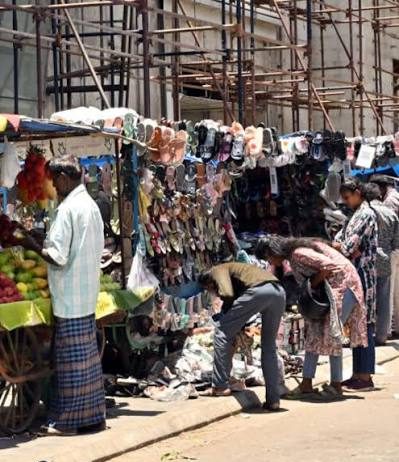
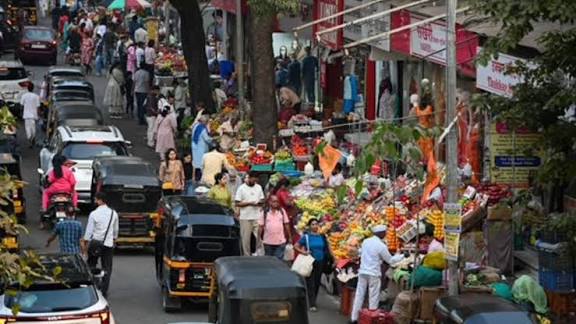
    India’s cities are economic superstars with municipal wallets that would embarrass a village panchayat. They generate more than 60 percent of the nation’s GDP, attract global capital, incubate innovation, and power the services economy that keeps India visible on the world map. Yet step outside the glass towers and GDP graphs collapse into broken pavements, clogged drains, traffic paralysis, unreliable water, and shrinking public space. The phrase “rich on paper, poor on pavement” is not rhetorical flourish; it is the central truth of India’s urban condition. This contradiction is not born of ignorance or lack of ambition, but of a structural failure where money stubbornly refuses to follow responsibility.

    The decay of Indian cities begins with governance that is fragmented, diluted, and politically micromanaged. Urban India is ruled not by cities but by committees: municipal corporations, development authorities, parastatals, state departments, utilities, and special purpose vehicles—often working at cross purposes. Accountability dissolves in overlapping jurisdictions, while decision-making slows into paralysis. Urban local bodies are constitutionally responsible for delivering everything from water and sanitation to roads, housing, and public health, yet they remain fiscally dependent on state governments. The 74th Constitutional Amendment promised empowered cities; what emerged instead were cities with obligations but no authority, plans but no purse, vision documents but empty treasuries.

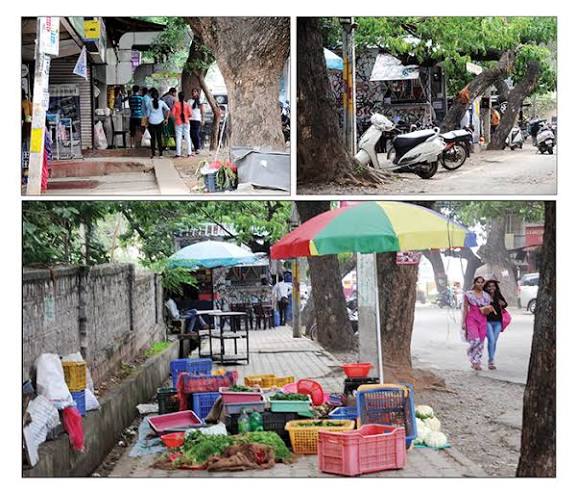
    This institutional weakness manifests brutally in infrastructure. Transport systems privilege cars over people, producing congestion without mobility and flyovers without flow. Footpaths are either absent or occupied, making walking an act of risk rather than right. Water supply remains intermittent, non-revenue water bleeds finances dry, sewerage networks are incomplete, and stormwater drains double as open trash channels until cities flood with clockwork predictability. Housing policy oscillates between unaffordable formal supply and informal slums that the city tolerates but never truly integrates. Assets are built with ceremony and then abandoned to neglect, trapped in a “build–ignore–rebuild” cycle that bleeds money without building resilience.

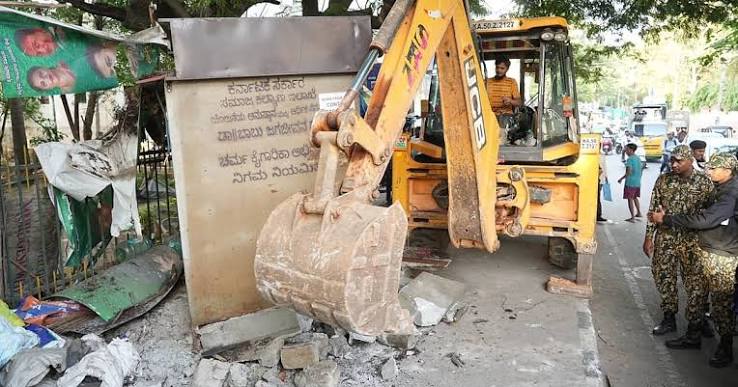
    Urban planning, which should be the intelligence system of a city, has become its weakest nerve. Master Plans are often outdated the day they are notified, disconnected from mobility, environment, and economic reality. Enforcement is selective, corruption-prone, and politically pliable, allowing encroachments on lakes, parks, and pavements while penalising the compliant. Citizens—the ultimate users of urban space—are rarely consulted beyond token hearings. The result is cities designed for land transactions rather than lived experience, for short-term extraction rather than long-term functioning.

    At the heart of this deterioration lies a fiscal scandal hiding in plain sight. All municipal bodies in India together spend barely 1.3 percent of GDP. This is not austerity; it is urban starvation. By comparison, local governments in China control nearly 25 percent of GDP spending, and in the United States, state and city governments account for about 20 percent. India’s cities carry the economic load of the nation on budgets that can barely cover salaries, electricity bills, and routine maintenance. Property taxes are politically under-exploited, user charges are rarely cost-reflective, and state transfers are uncertain and delayed. Cities earn wealth for the nation, but are denied the means to reinvest it in themselves.

    The failure of municipal bonds exposes this contradiction with particular cruelty. Municipal bonds should be the natural bridge between urban growth and infrastructure finance. Instead, India’s entire municipal bond market is barely ₹4,200 crore—economically trivial for a country of this scale. This is not because cities are fiscally bankrupt. Many major municipal corporations run revenue surpluses and have shown steady revenue growth. The problem lies in weak revenue autonomy, inconsistent accounting, poor disclosure, and the shadow control of state governments that undermines investor confidence. Cities are solvent but not sovereign, creditworthy but not credible, capable of repayment but denied independence.

    Globally, cities have solved problems India still debates. Singapore integrates planning, housing, transport, and finance through empowered institutions. Curitiba moves millions daily through efficient bus systems instead of chasing flyovers. Copenhagen designs streets for cyclists before cars. Medellín stitched its poorest neighbourhoods into the city through transport and public spaces, not token schemes. India knows these examples well; it cites them often, imitates them selectively, and funds them inadequately. Missions and acronyms create the illusion of progress, while the underlying fiscal architecture remains untouched.

    India is racing toward a $5 trillion economy on urban legs that are visibly buckling. This is not a failure of talent, technology, or intent. It is a refusal to trust cities with money, authority, and accountability. Until urban local bodies are empowered in deed, not just in documents—through real devolution of funds, predictable revenues, credible borrowing, and citizen-centric planning—India’s cities will continue to look prosperous from the air and dysfunctional at street level. The tragedy is not that India lacks capital; it is that its cities are forbidden from touching it.

    Visit arjasrikanth.in for more insights

  • From Red Flag to Fading Ash: India’s Communists Missed History While History Moved On

    January 21st, 2026

    On 26 December 2025, India crossed a centenary that should have provoked national introspection but instead passed in near silence: one hundred years since the formal founding of the Communist Party of India. Born in exile, incubated in Tashkent, and ideologically nurtured by international revolution, the CPI once believed history itself was marching in its favour. Yet its hundredth birthday arrived without celebration, debate, or even solidarity among the Left’s own fractured descendants. The irony was stark. On the same day, news broke of the killing of a senior Maoist leader—an echo from a violent fringe that now defines the Left more in obituary columns than in policy debates. The journey from revolutionary certainty to political marginality was not imposed on Indian communism; it was painstakingly self-authored.

    The CPI’s origins were global before they were national. Conceived under the influence of the Comintern, it entered India carrying an ideological passport stamped in Moscow rather than rooted in Indian political soil. From inception, it struggled with a foundational contradiction it never resolved: allegiance to international proletarian revolution versus loyalty to a nation struggling to free itself from colonial rule. This ambivalence proved fatal during the freedom movement. The party’s hesitation, opposition, or distance from decisive nationalist moments—most notably the Quit India Movement—placed it emotionally outside the mainstream of Indian nationalism. Independence itself was dismissed as a “bourgeois transfer of power,” a doctrinal position that permanently alienated the CPI from popular sentiment and national legitimacy.

    Post-independence offered opportunities for reinvention, but the party repeatedly chose rigidity over renewal. While India built a constitutional republic under Nehru, communists oscillated between parliamentary participation and flirtation with armed insurrection, inspired alternately by Moscow and Beijing. The Sino-Soviet split did more than fracture global communism; it shattered the Indian Left. The 1964 split between CPI and CPI(M) institutionalised ideological civil war, turning debates into permanent schisms. Every disagreement—on China, nationalism, parliamentarism, or alliances—ended not in synthesis but in separation. Fragmentation became the Left’s defining organisational skill. In contrast, the RSS, founded in the same year as the CPI, absorbed defeats and emerged more cohesive, demonstrating that ideological movements survive not by purity alone but by adaptability.

    Electoral success, when it came, proved deceptive. Long tenures in West Bengal, Kerala, and Tripura created administrative experience but also intellectual stagnation. The Left governed without renewing its social contract. Leadership aged, cadres ossified, and political language froze in a vocabulary increasingly alien to a changing India. After 1991, as liberalisation reshaped aspirations, the Left offered protest rather than persuasion. It opposed growth without articulating a credible alternative. The decisive rupture arrived in 2008, when the Left withdrew support to the UPA government over the Indo–US nuclear deal, privileging anti-American reflex over strategic relevance. Voters responded with clinical clarity: from 59 Lok Sabha seats in 2004 to single digits by 2019, with only a marginal, alliance-dependent recovery thereafter.

    The collapse, however, runs deeper than electoral arithmetic. Indian communism never resolved its democratic paradox. Parties preaching equality were often led by socially privileged elites. Movements condemning authority romanticised authoritarian regimes abroad. While celebrating constitutional freedoms at home, sections of the Left justified repression in the Soviet Union and China as “historical necessity.” This moral asymmetry hollowed out credibility. As India’s poor became aspirational rather than revolutionary, seeking mobility rather than upheaval, the Left remained trapped in the grammar of scarcity, unable to speak the language of opportunity.

    Today, the Communist Party survives institutionally but not intellectually. Kerala remains its last fortress, sustained more by welfare delivery than ideological conviction. Nationally, the Left no longer shapes debates; it reacts to them. Ironically, many of its economic ideas—state intervention, redistribution, welfare—have been appropriated by rivals, including the BJP, which practices a nationalist, electorally effective version of welfare politics without Left dogma. The Left’s paradoxical legacy is ideological redundancy: it lost power even as fragments of its thinking became mainstream.

    The CPI’s centenary thus marks not endurance but irrelevance. This is not a tale of persecution or betrayal, but of missed adaptations. History did not defeat Indian communism; Indian communism failed to understand history. In a democracy that prizes nationalism, pluralism, and aspiration, a movement perpetually torn between foreign doctrine and domestic reality was bound to fade. The red flag still flies in pockets—but as a national force, it now belongs less to India’s future than to its political archives.

    Visit arjasrikanth.in for more insights

  • “The Presidency as Personality: Donald Trump and the Psychological Rewiring of American Power” 

    January 20th, 2026

    Donald Trump did not merely occupy the American presidency; he reprogrammed it. His governance was anchored less in ideology, party doctrine, or institutional continuity and more in psychology—his own. To understand the internal shifts within the American state and the global recalibration that followed his rise, one must begin not with policy documents but with personality. Trump governed as he lived: loudly, instinctively, transactionally, and theatrically. In doing so, he broke decisively from the managerial, process-driven presidency that had defined the post–Cold War era and replaced it with a model in which the leader’s inner wiring functioned as the state’s operating system.

    At the core of Trump’s psychology lay extreme dominance-seeking extroversion paired with low agreeableness. He thrived on confrontation, visibility, and conflict, instinctively framing politics as a zero-sum contest between winners and losers. Compromise, within this mental framework, appeared not as prudence but as weakness. This explains why his governance was adversarial not only toward opponents but also toward allies, institutions, and even members of his own administration. His well-documented narcissistic traits—grandiosity, craving for admiration, hypersensitivity to criticism—were not rhetorical flourishes; they structured access, loyalty, and survival within the White House. Praise translated into proximity, dissent into exile. Governance resembled a court orbiting a single gravitational ego rather than a modern bureaucracy.

    Trump’s cognitive style intensified these tendencies. He privileged narrative over data, instinct over expertise, and repetition over nuance. Complex policy realities were compressed into emotionally resonant slogans—“America First,” “Make America Great Again,” “Fake News”—that reduced ambiguity and reinforced binary thinking. This was not mere simplification but psychological preference. Black-and-white framing allowed him to govern at the speed of impulse, bypassing the friction of deliberation and institutional review. Social media became not simply a communication tool but an extension of executive impulse itself, collapsing the distance between thought, emotion, and state action in real time.

    These traits were not born in politics; they were honed long before. New York real estate taught Trump that negotiation is combat, leverage is everything, and relationships are disposable once utility expires. Reality television refined his understanding that attention is power and drama is governance by other means. From The Apprentice, he absorbed the logic of spectacle: narrative domination, public humiliation, surprise reversals, and the centrality of the strongman figure. Politics, for Trump, became not the art of the possible but the art of the watchable—an arena where visibility substituted for legitimacy and performance for process.

    Domestically, this produced a personality-driven administration that strained democratic norms without formally dismantling them. Long-standing conventions—judicial independence, the insulation of law enforcement, transparency around conflicts of interest—were treated as negotiable obstacles rather than structural guardrails. Executive authority expanded not through constitutional rupture but through relentless pressure, acting appointments, public intimidation, and norm erosion. Governance increasingly targeted the political base rather than the national center, converting policy into a permanent campaign and politics into an existential identity struggle rather than a contest of ideas.

    Globally, Trump’s psychology translated into a radically transactional foreign policy. Alliances were evaluated as balance sheets, multilateralism dismissed as constraint, and unpredictability weaponized as strategy. His affinity for authoritarian strongmen was not ideological but psychological—rooted in admiration for visible power, decisiveness, and personal control. While he avoided large-scale wars, his erratic signaling unsettled allies and encouraged strategic hedging, even as U.S. soft power eroded and great-power rivalry intensified. The long-term consequences are structural: a Republican Party reshaped around personal loyalty, a fragmented information ecosystem, allies recalibrating against American volatility, and a global populist template exported worldwide. Ultimately, the Trump phenomenon demonstrated that in the age of mass media and permanent attention, the psychology of a single leader can bend institutions, redefine norms, and reshape how power itself is imagined and exercised.

    Visit ajrasrikanth.in for more insights

  • “The Sound of Silence in World Politics: Xi Jinping’s Cold Mastery of Time, Power, and Patience” 

    January 19th, 2026

    In an era where global power is increasingly performed rather than exercised—through military parades, tariff theatrics, social-media diplomacy, and televised bravado—Xi Jinping revived an older, colder discipline of statecraft: strategic silence. While Washington tweeted and Moscow thundered, Beijing recalibrated. Xi did not seek to outshout the United States or collide head-on with Russia; he waited, observed, absorbed pressure, and quietly rearranged the board. By the time rivals realised the rules had shifted, China had already moved from the periphery of the global order to its structural core.

    This approach is inseparable from China’s historical memory. The trauma of famine, ideological extremism, and isolation during the Great Leap Forward and the Cultural Revolution left an enduring imprint on the Chinese political psyche. When reform and opening began in the late 1970s and early 1980s, survival—not supremacy—was the overriding objective. Factories proliferated, labour migrated, and China became the manufacturing backbone of the world. For decades, Beijing accepted a deliberately restrained geopolitical posture in exchange for economic oxygen. It was during this prolonged apprenticeship that China internalised its most consequential lesson about power: patience is not passivity; it is preparation.

    Xi Jinping emerged from this crucible not as a charismatic reformer but as a disciplined product of the system. Sent to the countryside as a young man, shaped by scarcity, political caution, and institutional memory, Xi absorbed a principle that many Western analysts underestimated: in China, authority does not announce itself—it consolidates. When he assumed leadership in 2012, China still lacked a fully operational blue-water aircraft carrier, American policymakers continued to speak confidently of “engagement,” and Russia still viewed itself as the principal challenger to U.S. dominance. Xi made no grand declarations. He watched everything.

    His first arena of action was domestic. Xi grasped that sustained global ambition is impossible without internal discipline. The anti-corruption campaign, publicly framed as moral rectitude, functioned in practice as political surgery. Rivals were removed not through spectacle or purge-theatre, but through investigation, procedure, and law. Entire factional networks dissolved without tanks on the streets or emergency broadcasts. Stability was preserved, resistance neutralised, authority centralised. Silence here was not weakness; it was insulation.

    Only after consolidating the Party did Xi turn outward. While the United States oscillated between engagement, confrontation, and retreat, China focused on capacity. Ports, railways, power grids, logistics corridors, digital infrastructure. The Belt and Road Initiative was not marketed as empire but as connectivity. Travel times collapsed, supply routes multiplied, and economies were reoriented. Debt risks were real, defaults occurred, and criticism mounted—but dependency, even when imperfect, translates into leverage. Xi did not demand allegiance; he narrowed alternatives.

    The contrast with American and Russian behaviour is instructive. The United States under Donald Trump opted for noise—tariffs, threats, slogans, and transactional diplomacy. Beijing responded, but without escalation theatrics. Retaliation was calibrated, election cycles were patiently endured, symbolic deals were signed, and structural preparation continued. By the time Washington promised once again to “get tough,” China had already diversified supply chains, expanded domestic consumption, and accelerated technological self-reliance.

    Russia, by contrast, mistook disruption for dominance. Its strategy privileged shock, coercion, and visible force. Xi observed closely and learned what to avoid. China did not annex; it financed. It did not invade; it embedded. While Moscow expended capital through confrontation, Beijing accumulated it through institutions—diplomatic missions, UN contributions, standards-setting bodies, climate negotiations, and development banks. Power exercised quietly is far harder to sanction.

    Equally underestimated was China’s narrative restraint. Beijing did not aggressively export ideology or demand civilisational conversion. It positioned itself as a development partner rather than a moral crusader. For many states in Asia, Africa, and Southeast Asia, this distinction mattered. China was not perceived as an enemy but as a market. Even close U.S. allies maintained deep economic ties despite strategic unease. Silence reduced fear; pragmatism built acceptance.

    Military modernisation followed the same logic. Xi prioritised loyalty before hardware. The People’s Liberation Army was restructured, purged, and centralised long before it was showcased. Only after command certainty was secured did China visibly assert itself in the South China Sea or expand naval reach. Unlike Washington’s conspicuous deployments or Moscow’s dramatic posturing, Beijing’s rise appeared sudden only because it had been deliberately understated.

    What unsettles rivals most is not China’s power, but its temporal horizon. Democracies think in elections. Authoritarian challengers often think in crises. Xi thinks in decades. While others react, he sequences. While others speak, he measures. In a world addicted to instant signalling, this strategic muteness has proven disarming.

    This is not a guarantee of permanence. Silence can mask fragility as well as strength. Demographic decline, debt stress, internal repression, and mounting global resistance remain real constraints. Yet as a strategist, Xi Jinping has already accomplished something rare in modern geopolitics: he outmanoeuvred louder rivals not by confronting them, but by allowing them to exhaust themselves.

    In the final accounting, America flexed. Russia roared. China listened—and quietly shifted the centre of gravity.

    Visit arjasrikanth.in for more insights

  • From Tea Stall to Command Tower:  Narendra Modi’s Inner Wiring Became India’s Operating System

    January 18th, 2026

    History often explains governments through ideology, coalitions, or economic compulsions. Narendra Modi’s India demands a different analytical lens: psychology as policy. The journey from a tea-selling childhood in Vadnagar to the apex of the world’s largest democracy is not merely inspirational biography; it is a governance template forged in scarcity, solitude, and self-discipline. Raised amid material deprivation and social marginality, Modi internalised an early conviction that survival and success arise from individual will rather than institutional support. Early detachment from family and emotional anchors deepened this belief, producing a leader who privileges personal judgment over collective deliberation. In this worldview, governance is not negotiated; it is executed. The state becomes an extension of resolve rather than a forum of competing ideas.

    That instinct acquired organisational form within the Rashtriya Swayamsevak Sangh. The RSS did not simply impart ideology; it provided Modi with an administrative grammar—hierarchy, discipline, obedience, sacrifice, and clarity of command. As a pracharak, he learned to operate without personal attachments, subordinate individuality to mission, and interpret dissent as indiscipline rather than debate. These traits later migrated seamlessly into government. Under Modi, the Indian state increasingly resembles a cadre-based system rather than a consultative republic. Authority flows downward, loyalty is rewarded, and ambiguity is treated as weakness. The conspicuous absence of autonomous peer leadership around the Prime Minister is not incidental; it reflects deep comfort with vertical control and an ingrained distrust of competing centres of power.

    Modi’s tenure as Gujarat Chief Minister further hardened these instincts under siege.

    The 2002 riots and their aftermath permanently reshaped his relationship with institutions, critics, and dissent. Surrounded by scrutiny and international isolation, he doubled down on unilateral decision-making and bureaucratic command. Ministers became executors rather than policymakers, and independent voices were systematically filtered out.

    This CEO-style governance—centralised, insulated, and outcome-driven—was later scaled nationally after 2014. The electoral victory validated what might be called the “one-man engine” theory of politics: campaigns, messaging, fundraising, and strategy revolved around a single persona. Personal political capital ceased to be merely an asset; it became the operating system.

    Once in Delhi, personality hardened into state architecture. Self-reliance translated into unprecedented concentration of power within the Prime Minister’s Office. Surprise evolved into a governing instrument: demonetisation announced overnight, a nationwide COVID lockdown imposed with four hours’ notice, Article 370 revoked without conventional parliamentary choreography. These were not policy miscalculations but expressions of a leadership temperament that values shock, secrecy, and control. Cabinet deliberation narrowed, Parliament’s role diminished, and institutions such as the RBI, Election Commission, and investigative agencies appeared progressively aligned with executive preference. Transparency eroded not through overt authoritarianism, but through operational opacity—limited press conferences, monologue-style communication, and financial mechanisms like electoral bonds and PM-CARES designed beyond routine public scrutiny.

    The same emotional distance that insulated Modi personally now defines political culture. Ministers are frequently reshuffled to prevent the emergence of independent stature. No clear successor or second-in-command is permitted to crystallise. Welfare schemes are branded with the Prime Minister’s name, reinforcing a direct, almost transactional relationship between leader and citizen. Bureaucrats are valued for loyalty and execution speed over dissenting expertise. The result is a governance ecosystem optimised for obedience and delivery, not institutional memory or policy depth. Federalism strains as governors, central agencies, and fiscal levers are deployed to discipline opposition-ruled states. Cultural nationalism fills the ideological space, reframing critics as adversaries and dissent as disloyalty.

    This leadership paradigm carries undeniable strengths. Decisiveness replaces drift, narrative coherence substitutes coalition paralysis, and India’s global visibility has expanded. Yet the systemic costs are accumulating quietly. Institutions weaken when deprived of autonomy, feedback loops collapse under excessive centralisation, and policy volatility increases when decision precedes consultation. Most critically, the system becomes hostage to a single individual’s health, judgment, and popularity. Modi’s governance model, born of struggle and discipline, has delivered dominance—but dominance is not durability.

    The/all unresolved question is structural rather than personal. Can a democracy sustain itself when governance mirrors the acquired traits of one individual? Or does such concentration—however effective in the short term—render the republic brittle once the individual exits? Narendra Modi has not merely governed India; he has rewired its operating logic. Whether this wiring strengthens the nation or leaves it dangerously dependent on one man’s inner compass will define India’s democratic future long after the slogans fade.

    Visit arjasrikanth.in for more insights

1 2 3 … 136
Next Page→

Blog at WordPress.com.


Loading Comments...
 

    • Subscribe Subscribed
      • SOCIAL PERSPECTIVES
      • Join 98 other subscribers
      • Already have a WordPress.com account? Log in now.
      • SOCIAL PERSPECTIVES
      • Subscribe Subscribed
      • Sign up
      • Log in
      • Report this content
      • View site in Reader
      • Manage subscriptions
      • Collapse this bar